
What the Playground Teaches

Some of the most important lessons of a childhood are never written on a board. On why sport, and the open ground it needs, belong at the heart of a school and not at its edge.
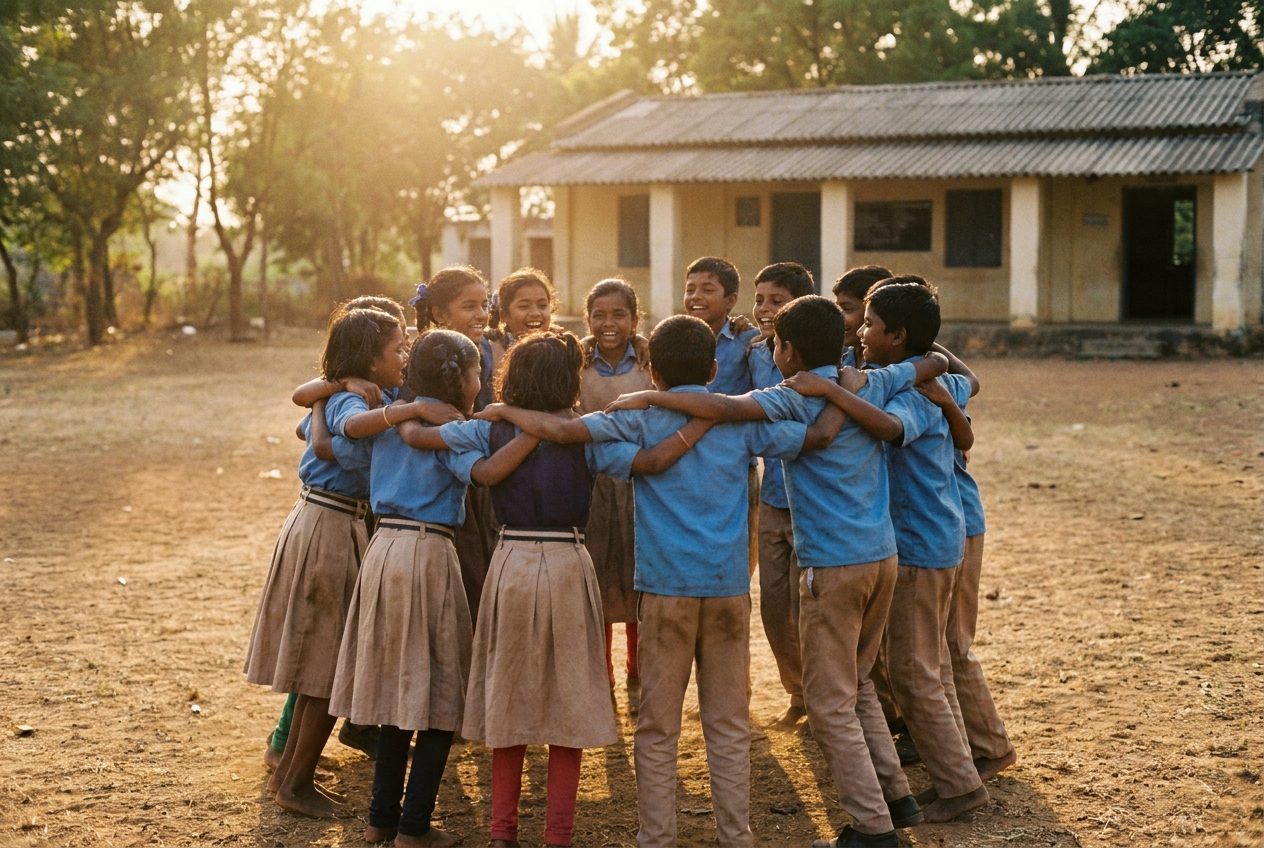
Visitors admire our classrooms and our laboratories, as they should. But I often find myself steering them, in the end, toward the open ground — because a good deal of the real education at Wendy happens there, under the sky, where not a single lesson is written down.
Lessons without a syllabus

Sport teaches what no textbook can. A child learns to win without gloating and to lose without falling apart — and the second is by far the harder, more valuable lesson. They learn that effort and practice change outcomes. They learn to trust a teammate, to take a turn, to keep going when their lungs are burning and the result is uncertain. On the field, courage, patience, and fairness stop being words in a moral-science lesson and become things a child actually does.
Fit in body, steady in mind
There is the plain matter of health, too. Children are made to move, and a childhood spent only at a desk is not a healthy one. Daily games and physical training keep our students strong, and a body that is well exercised carries a mind that concentrates better and worries less. We have long believed in this balance — which is why activity, and even yoga, have always had a place in the school week, not merely a corner of it.
And there is friendship. Some of the deepest bonds a child forms at school are made not in the classroom but in a shared team, a shared defeat, a shared and hard-won victory. Those friendships often outlast the school itself.
So we treat our roughly one-acre ground not as a luxury but as a classroom of its own, and we make sure every child — not only the naturally gifted athlete — gets to use it. Marks matter. But a healthy, resilient, generous young person, at ease in their own body and kind to the people beside them: that is a result no report card records, and one we care about just as much.