
Teaching for Understanding

A child can memorise a page and understand none of it. Why we would rather a student grasp one idea fully than parrot ten — and how we teach for the difference.
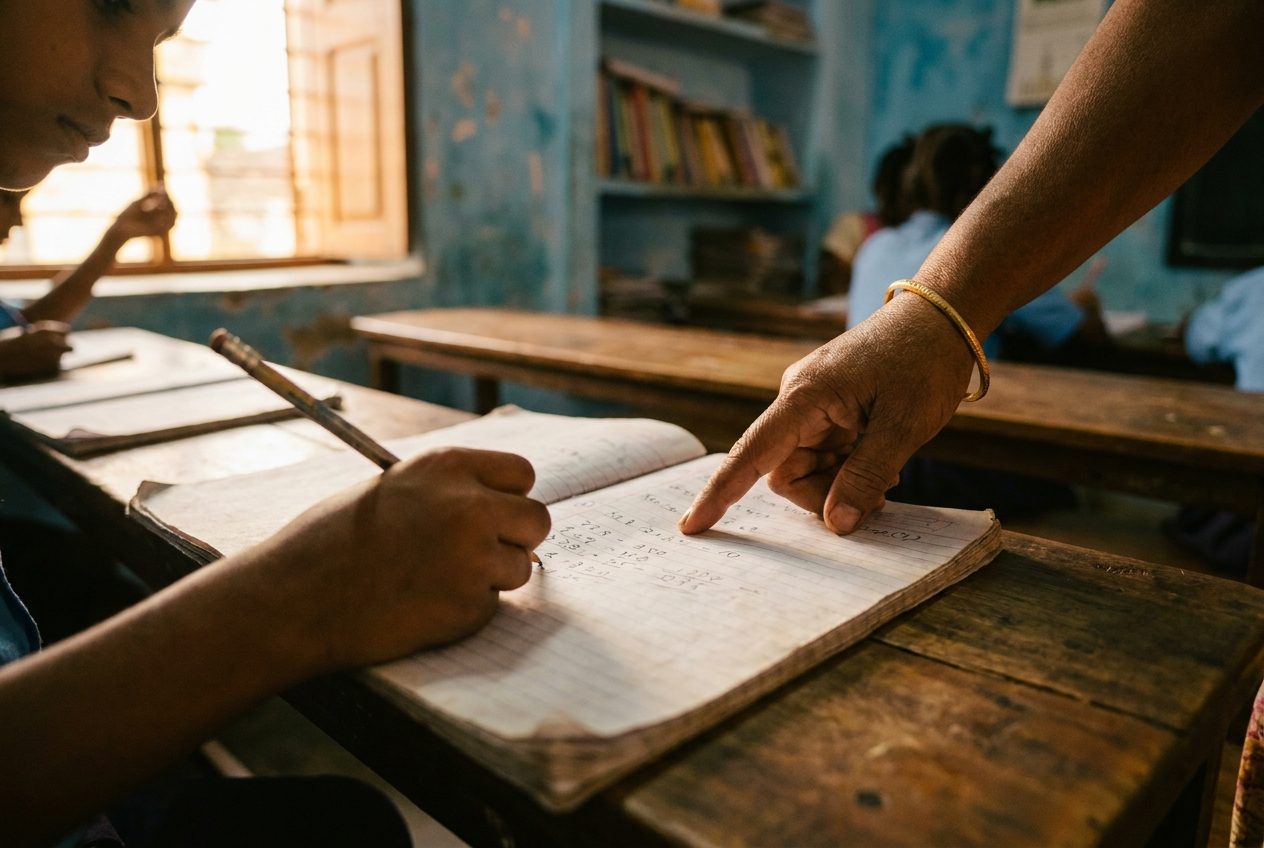
There are two ways to prepare a child for an examination. One is to have them memorise the answers. The other is to have them understand the subject. Both can produce a correct paper. Only one produces an educated person — and, in the long run, only one reliably produces good marks too.
The difference a teacher makes
Memorised knowledge is fragile. It sits on the surface, unattached to anything, and it evaporates the moment the test is over — or the moment a question is asked in an unfamiliar way. Understood knowledge is different. It is connected: to what the child already knows, to the world outside the window, to the reason the idea matters. Understanding bends without breaking. Ask a child who has merely memorised to apply their knowledge to something new and they freeze; ask a child who has understood, and they reason their way forward.
How we teach
Teaching for understanding is slower and harder than teaching for recall, and it asks more of a teacher. It means building a concept carefully rather than announcing it. It means using the laboratory, the real object, the worked example, and the honest question — why do you think that happens? — instead of only the textbook. It means welcoming the wrong answer as a window into how a child is thinking, rather than simply marking it and moving on.
It also means resisting the urge to cover everything at a gallop. I would far rather a child leave a lesson having truly grasped one idea than having glimpsed ten. The one idea, properly understood, becomes a hook on which the next ten can hang.
We do prepare our students thoroughly for their examinations — that is our duty, and we take it seriously. But we prepare them by making sure they understand, not merely remember. It is the difference between a child who has been schooled and a child who has been educated. We have always known which of the two we are trying to raise.